The Tug is the Drug: Chasing Giants with Trout Spey on the Williamson River

When fly anglers speak of the Williamson River, the conversation usually centers on one thing: size. This legendary spring-fed gem in the Klamath Basin is world-renowned for hosting massive, lake-run Redband trout that migrates from Agency and Upper Klamath Lakes. While many approach these waters with heavy indicator rigs or stripped leeches, there is a more soul-satisfying way to meet these giants—the Trout Spey swing.
Swinging a fly on the Williamson isn't just a tactic; it’s an exercise in patience, grace, and anticipation.
Why Swing the Williamson?
The Williamson is a river of moods. It features slow, deep "frog water" reaches and classic, walking-pace runs that are tailor-made for a two-handed rod.
Distance and Depth: With wide sections and often spooky fish, the ability to launch a 70-foot cast with a simple D-loop is a massive advantage.
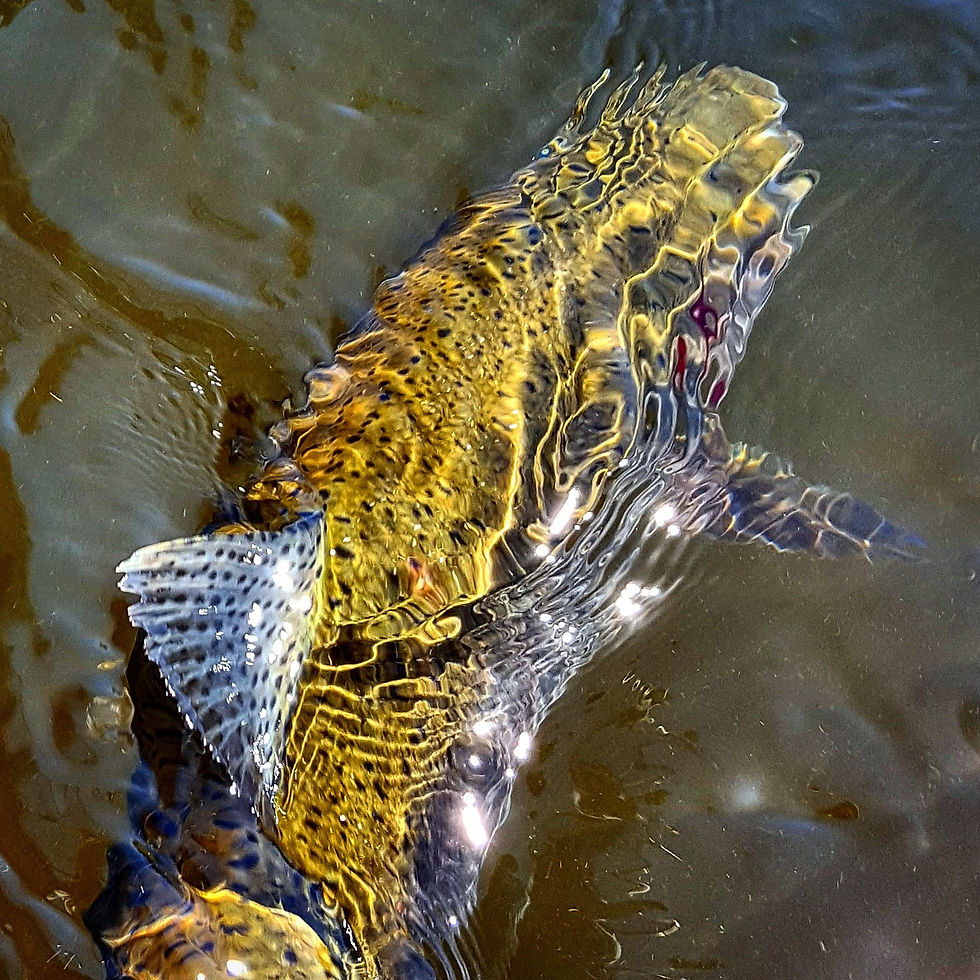
The Anatomy of the Take: On a river where a "small" fish is 18 inches and a "trophy" can push 30 inches, the mid-swing grab of a Williamson Redband is legendary. It’s a violent, rod-shaking encounter that you simply don’t feel the same way when fishing under a bobber.
Managing the Wind: The Klamath Basin is notorious for its afternoon winds. A light Spey setup (3-weight to 5-weight) cuts through the gusts far more efficiently than a standard overhead 5-weight.
Tactical Approach: The "Slow and Low"
Unlike the faster "pocket water" found elsewhere in Southern Oregon, the Williamson demands a calculated swing. These large trout often hold near bottom contours or along the steep ridges that line the banks.
The Streamer Swing: Focus on patterns that mimic the river's primary forage—leeches and sculpins. A Skagit head paired with a moderate sink tip (T-8) is essential to get your fly down into the strike zone.
The "Dangling" Strategy: On the Williamson, the "hang" at the end of the swing is just as important as the swing itself. Often, a big Redband will follow a fly across the current and only commit once it begins to rise or hover in the "dead water" below you.
Soft Hackles in the Riffles: In the upper reaches of the river, particularly during a Hexagenia or Drake hatch, swinging large soft hackles can be incredibly productive as the nymphs begin their ascent.

Essential Gear for Williamson Giants
Because you are targeting fish that can weigh upwards of 10 pounds, your "Trout Spey" kit needs a bit more "oomph" than usual.
Rods: A 4-weight or 5-weight Spey rod (11' to 12') is the sweet spot. It provides enough lifting power to steer a large fish away from the under water reefs without losing the "trout" feel.
Leaders: Don't go too light. These fish are leader-shy, a 4x to 6x fluorocarbon is standard to ensure hookups.
Fly Selection: Balanced Leeches, Seal Buggers (in olive, black, or maroon), and the classic Jay's Thin Mint.
Respecting the Jewel of the Basin
The Williamson is a catch-and-release treasure with specific regulations to protect these unique migratory strains. Always check the current ODFW guidelines before heading out.
There is nothing quite like the silence of the Williamson broken only by the zip of a reel and the splash of a tail the size of a shovel. Step into the swing and see why this river remains the crown jewel of the West.



Comments